South African Municipality Faces Division Over Colonial Name Change Decision
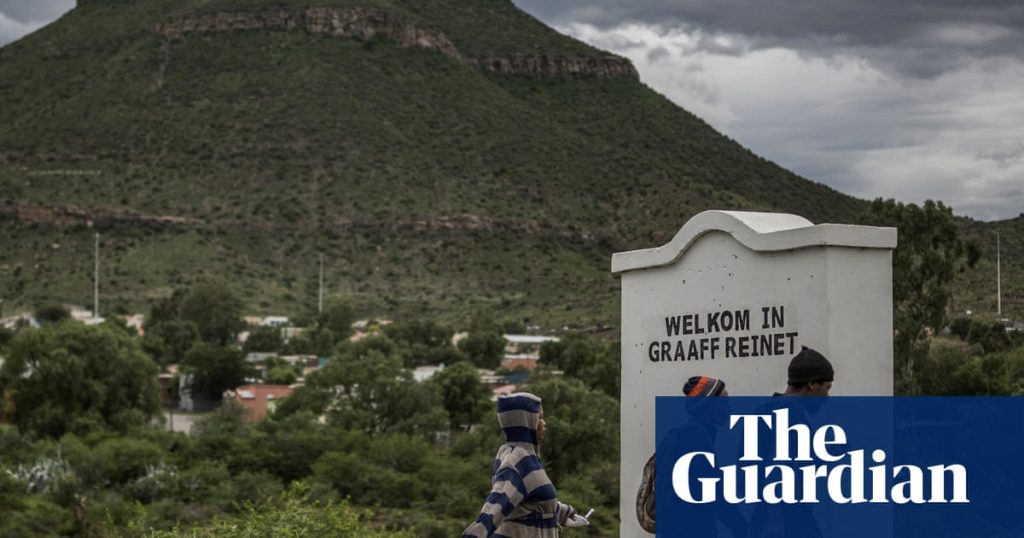
A historic South African municipality is experiencing significant community discord following the government’s decision to replace its colonial-era designation with one honoring a prominent anti-apartheid leader, highlighting ongoing racial divisions in the post-apartheid nation.
Sports, Arts and Culture Minister Gayton McKenzie officially sanctioned the transformation of the town’s name from its Dutch colonial origins to Robert Sobukwe on February 6th, sparking widespread community activism including petition drives, competing demonstrations, and formal appeals to reverse the decision.
The controversy centers on replacing a name that dates back to 1786, when the settlement was established and named after Dutch Cape Colony Governor Cornelis Jacob van de Graaff and his spouse Hester Cornelia Reynet. Supporters of the change argue that honoring Sobukwe, who was both born and interred in the community, represents essential progress in South Africa’s ongoing effort to move beyond its colonial and apartheid legacy.
Historical Significance of Robert Sobukwe
Sobukwe emerged as a crucial figure in South African liberation politics when he departed from the African National Congress in 1959 to establish the Pan Africanist Congress, driven by philosophical differences regarding white membership in liberation movements. His leadership became internationally recognized on March 21, 1960, when he organized demonstrations against discriminatory pass laws requiring Black South Africans to carry identification documents. The protests culminated tragically when police gunfire killed 69 demonstrators in what history remembers as the Sharpeville massacre.
Nationwide Transformation Initiative
This name change represents part of a broader national initiative that has seen over 1,500 geographical designations altered between 2000 and 2024. The comprehensive program has affected more than 400 postal facilities, 144 waterways, and seven aviation hubs, including the 2021 transformation of Port Elizabeth to Gqeberha.
Government officials describe the mission as addressing historical injustices through geographical nomenclature reform, specifically targeting colonial and apartheid-era naming conventions to advance restorative justice principles.
Community Opposition and Support
Research conducted in December 2023 revealed substantial community resistance, with 83.6% of residents opposing the name modification. The opposition was particularly strong among Coloured residents at 92.9% and white residents at 98.5%, while Black residents showed more division with 55% opposing and one-third supporting the change. The study surveyed 367 randomly selected participants representing the community’s demographic composition.
Local activist Laughton Hoffman, representing both Coloured and indigenous Khoi-San heritage, expressed concerns about potential economic impacts on tourism, emphasizing that the community had transformed the colonial name into an economic asset. He argued that his community has faced marginalization under post-apartheid governance, feeling overlooked for three decades as a distinct cultural group.
Legal challenges have emerged, with attorney Derek Light questioning the procedural validity of public consultations, characterizing them as inadequate. He lamented the social tensions the controversy has generated in what he described as a previously harmonious community.
Voices Supporting Change
Members of the Robert Sobukwe Steering Committee, advocating for the name change, disputed claims of previous racial harmony. Committee member Athe Singeni acknowledged that racial tensions had always existed, though often in subtle forms. Her mother, Nomandla, emphasized the importance of recognizing Black historical figures whose contributions have been systematically erased, particularly those who sacrificed for contemporary freedoms.
In the former township area of uMasizakhe, residents expressed enthusiasm for honoring Sobukwe. Local resident Mzoxolo Nkhomo, a 59-year-old job seeker, celebrated the recognition of someone he considers a freedom fighter who contributed to liberation.
The controversy has even affected commemorative sites, with the Robert Mangaliso Sobukwe Museum and Learning Centre remaining closed due to family disputes, and a statue of the leader being covered following recent vandalism of his grave site.
Political Complexities
Sobukwe’s grandson, Mangaliso Tsepo Sobukwe, acknowledged the political instrumentalization of place-name changes while expressing satisfaction that his grandfather’s legacy is being recognized. He noted the irony of the ANC championing Sobukwe’s memory despite historically suppressing his political contributions.
The situation reflects broader challenges in post-apartheid South Africa as communities navigate the complex process of addressing historical injustices while managing contemporary social cohesion and economic concerns.