Energy Markets Surge Amid Concerns Over Middle East Ceasefire Stability
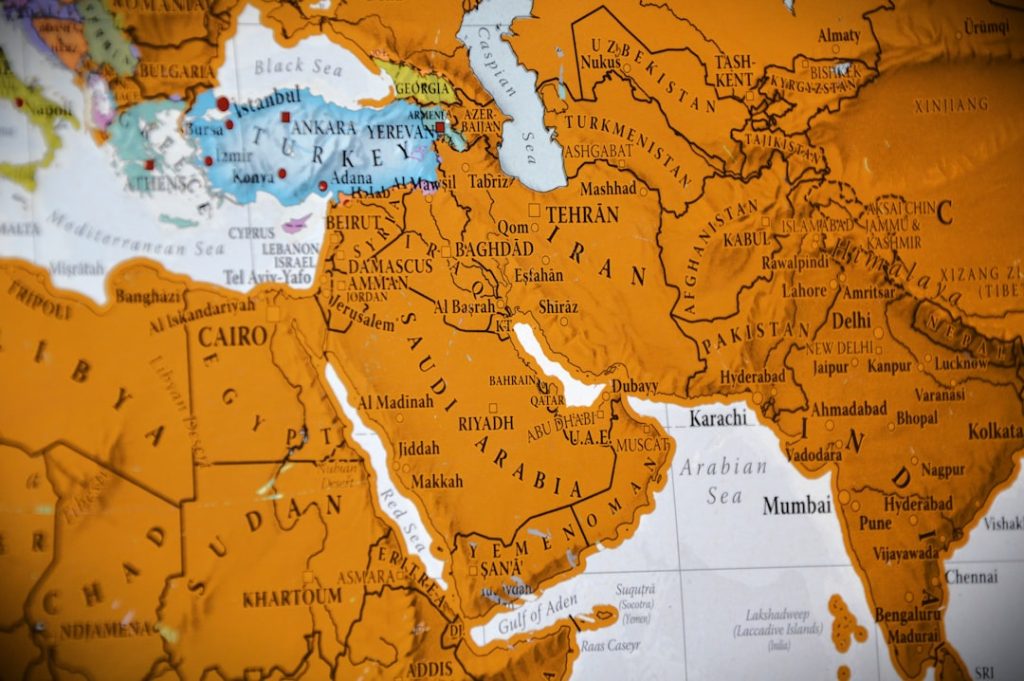
Energy commodities experienced significant upward pressure on Thursday as financial markets expressed skepticism about the sustainability of a recently announced Middle East truce, while global equity indices retreated from previous gains following Wednesday’s robust performance.
The fragility of a two-week cessation of hostilities involving Iran became increasingly apparent as Israel maintained its military operations in Lebanon, prompting both Washington and Tehran to issue warnings about potential resumption of armed conflict.
Just one day following the announcement of a last-minute truce between the United States and Iran, which included provisions for reopening the strategically vital Strait of Hormuz, numerous uncertainties persisted and early indications suggested the agreement was already experiencing violations, creating nervousness among investors.
Energy Commodity Price Movements
Brent crude oil, serving as the international pricing benchmark, increased by more than 2% during Thursday trading, reaching $96.77 per barrel while staying under the $100 threshold. Meanwhile, West Texas Intermediate crude climbed nearly 3% to $97.23 per barrel. This represented a recovery from Wednesday’s dramatic decline when Brent plummeted 13.29% to reach a four-week minimum of $94.75 per barrel.

Natural gas markets also experienced upward momentum, with the month-ahead UK gas contract advancing 1% to 115.35 pence per therm, recovering from Wednesday’s 15% drop that followed the ceasefire announcement. European natural gas futures climbed toward €46 per megawatt hour on Thursday, bouncing back from a five-week low after falling almost 15% to €45.30 per megawatt hour the previous day.
Regional Tensions Escalate
The United Arab Emirates and Kuwait reported their air defense systems had successfully intercepted Iranian drone attacks, while Tehran’s parliamentary speaker Mohammad Bagher Ghalibaf accused Israel and the United States of breaching multiple provisions of the ceasefire agreement.
Iran’s Revolutionary Guards issued warnings of a response that would cause regret if Israel failed to cease its strikes against Lebanon. Reports from the Fars news agency indicated that oil tanker transit through the strait had been suspended due to Israel’s extensive bombardment of Lebanon on Wednesday, marking the most severe attacks since the conflict began and resulting in at least 254 fatalities with 837 wounded.
Former President Donald Trump used his Truth Social platform to declare that American forces would maintain their positions in and around Iran until complete compliance with the agreement was achieved. He threatened that non-compliance would result in military action exceeding anything previously witnessed.

Global Market Response
Asian equity markets reflected the uncertainty, with Japan’s Nikkei declining 0.7% after Wednesday’s 5.4% surge, South Korea’s Kospi dropping 1.7% following the previous day’s 7.5% gain, and Hong Kong’s Hang Seng falling 0.4%.
European markets opened with losses as Wednesday’s optimistic sentiment diminished. The UK’s FTSE 100 slipped 0.1%, Germany’s DAX decreased 0.6%, France’s CAC fell 0.3%, and Italy’s FTSE MIB dropped 0.2%. The pan-European STOXX 600 index edged down 0.1% after Wednesday’s nearly 4% increase, which marked its strongest performance since 2022.
US stock futures indicated a lower opening for Wall Street trading sessions.
Expert Analysis
Deutsche Bank strategist Jim Reid observed that despite current concerns, market stress had diminished considerably compared to 24 hours earlier, as ceasefire developments and hopes for de-escalation had generated increased optimism. He noted that fears regarding a stagflationary shock had substantially decreased.
Progress indicators remained visible, with White House Press Secretary Karoline Leavitt announcing that Vice President JD Vance would head a delegation to Islamabad, with initial discussions scheduled for Saturday morning.
Jefferies Chief European Economist Mohit Kumar expressed belief that the ceasefire would endure, not due to finding a permanent solution but because of the mutually assured destruction principle. He suggested both parties desired a ceasefire as continuing the conflict would guarantee negative consequences for all involved, noting that Trump seeks an agreement without support from his political base for continued warfare, while the US and Israel have recognized the challenges of winning without solutions for affordable drone interception and Strait of Hormuz bypass alternatives.
Photo by Emin Huric on Unsplash
Photo by Cole Keister on Unsplash
Photo by ARTISTIC FRAMES on Unsplash