RAF Aerial Operations: British Forces Combat Iranian Drone Threats from Cyprus Base
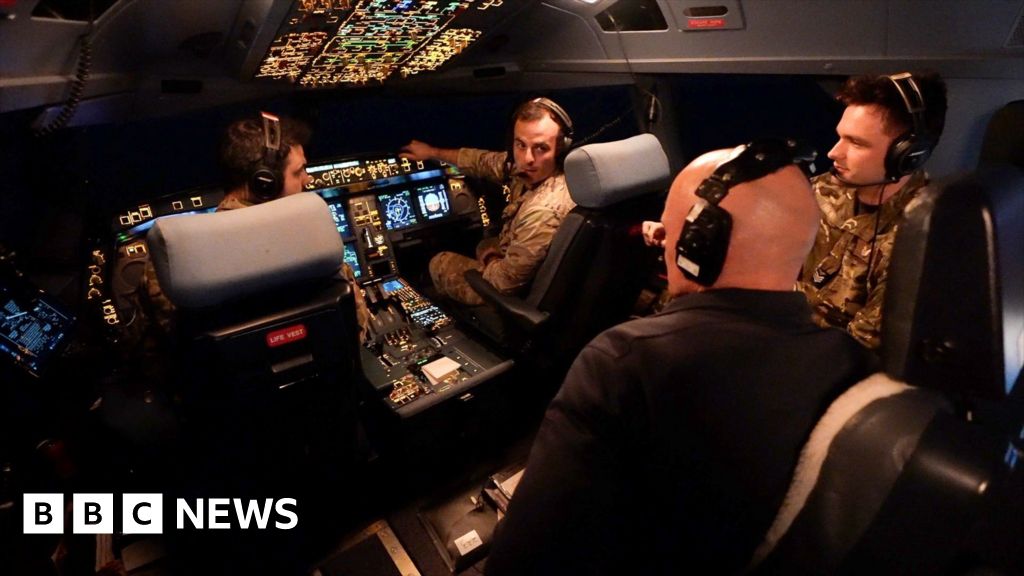
The piercing sound of advanced fighter aircraft cuts through the darkness over the British military installation at Akrotiri, Cyprus. Typhoon and F-35 jets launch into the night, accompanied by massive aerial refueling tankers on a critical mission to intercept Iranian unmanned aircraft.
These Royal Air Force Voyager aircraft serve as flying fuel stations, supporting the fighter jets that have maintained continuous patrols across Cyprus and Jordan throughout the past month. The defensive operations have intensified since military actions began involving the United States and Israel against Iranian targets.
Journalists recently gained unprecedented access to these nighttime defensive sorties, observing operations from within the cockpit of a Voyager tanker. As the aircraft departed Cyprus, the island’s lights gradually disappeared below while the crew navigated toward the Israeli and Lebanese coastlines.
During the flight, brief orange flashes became visible in the distance. Crew members explained these illuminations likely represented either incoming Iranian projectiles or Israeli defensive responses, possibly from the Iron Dome missile defense network. The pilot noted significant military activity occurring throughout the region.
These observations confirm that despite weeks of intensive bombardment, Iran continues launching missiles and drones, maintaining its threat capability. Throughout a single nine-hour patrol, the accompanying fighter jets required refueling seven times, consuming approximately 30 tonnes of aviation fuel.
The complex aerial refueling process involves fighter aircraft emerging from darkness at high speed to execute precise maneuvers, connecting to fuel lines extending from the tanker’s wings. While this procedure has become routine for pilots, hunting Iranian drones presents greater challenges.
British aircraft operating from Cyprus and Qatar have successfully intercepted multiple Iranian drones over recent weeks. Military officials decline to specify exact numbers but confirm single-digit engagements using advanced short-range air-to-air missiles. These sophisticated weapons represent expensive solutions for destroying relatively inexpensive fiberglass drones.
Squadron Leader identified as ‘Bally,’ an F-35 pilot, described the mission’s complexity. Operating fast jets presents inherent dangers, particularly when targeting low-altitude objects. The drones’ slow, low-altitude flight patterns create ground collision risks for pursuing aircraft.
Additional hazards include potential conflicts with other military aircraft operating in congested airspace. These missions, designated ‘Operation Luminous,’ have continued since hostilities began, though this particular sortie identified no targets.
Despite facing criticism, government officials maintain they implemented adequate preparations, deploying additional aircraft, defense systems, and personnel to Cyprus before the conflict commenced. Major General Tom Bewick, commanding British forces in Cyprus, emphasized prudent pre-war planning, including enhanced ground-based air defenses and radar capabilities.
However, these preparations didn’t prevent a drone strike on the base during the war’s second night. A small unmanned aircraft, likely launched from Lebanon, struck a hangar in the American Air Force section of the facility. The two-meter wingspan drone was tracked by radar systems, providing sufficient warning time for personnel evacuation.
General Bewick characterized the damage as minimal, suggesting the attackers achieved limited results despite potentially hitting their intended target. Following this incident, Akrotiri’s defensive capabilities have been significantly strengthened.
The base now hosts eight Typhoon jets and eight F-35 aircraft. Recent reinforcements include Wildcat helicopters equipped with short-range defensive missiles and Merlin helicopters featuring early warning radar systems. The Royal Navy destroyer HMS Dragon provides additional offshore air defense coverage.
General Bewick expressed satisfaction with having advanced naval assets in the region while confirming robust base defenses. Given Iran’s public statements identifying RAF Akrotiri as a target, he acknowledged taking these threats seriously. While acknowledging potential future attacks, he maintains the facility is optimally protected.
Positive indicators suggest improving conditions at the base. Most military families who evacuated following the initial attack have returned home. Air raid warnings occur less frequently due to enhanced intelligence gathering and detection capabilities.
The United Kingdom has also provided reassurances to Cyprus. Following the drone strike, Cyprus’s president called for transparent discussions regarding Akrotiri’s future. General Bewick reports close cooperation with Cypriot authorities while emphasizing that British sovereignty over the base remains non-negotiable.
The conflict’s duration remains uncertain, with its conclusion beyond British control. Maintaining heightened defensive postures at RAF Akrotiri will inevitably strain the UK’s already stretched military resources. Some Royal Navy helicopters now stationed at Akrotiri were originally assigned to accompany aircraft carrier HMS Prince of Wales on North Atlantic operations.
RAF aircraft have suspended their decade-long counter-ISIS missions under ‘Operation Shader’ to focus on Cyprus defense. Group Captain Adam Smolak, Akrotiri’s station commander, anticipates extended defensive operations, predicting continued base protection requirements for the foreseeable future.
Historical precedent suggests American military interventions in this volatile region rarely conclude quickly or easily, indicating potentially prolonged operational commitments.